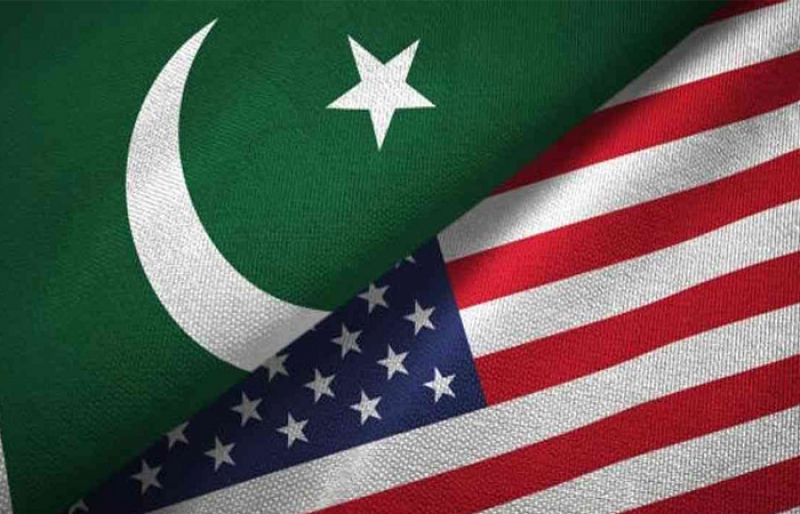
Concluded on July 31, 2025, the deal reduces average US import tariffs on Pakistani goods to 19%, sparing the country from facing duties as high as 29% under the sweeping “Liberation Day” tariff regime.
In public statements, President Donald Trump praised Pakistan for concluding the agreement and linked the arrangement to potential US-led investment in Pakistan’s oil reserves described as “massive” and awaiting development by an American energy firm.
This link between trade relief and resource cooperation is not merely economic; it is deeply strategic and reshapes how Islamabad must now balance its external relations.
The lowered tariffs provide necessary support for Pakistan’s export-heavy industries, especially textile and agriculture.
These sectors are particularly vulnerable to shifts in international market access and the trade deal ensures they keep a foothold in a critical market.
The United States accounts for more than 18% of Pakistan’s total exports, with textile forming the largest share.
According to the Pakistan Bureau of Statistics and Comtrade data, Pakistan’s exports to the US totaled $6.8 billion in 2024, where garments, home textiles and Basmati rice dominated the basket.
Without the tariff deal, these exports would have suffered a blow to competitiveness amid rising global trade friction and a high-cost domestic environment.
While the 19% tariff is lower than the expected punitive rate, it remains significant and still puts Pakistani goods at a disadvantage compared to nations with free trade arrangements.
Moreover, as noted in recent US Trade Representative and World Trade Organisation (WTO) policy reviews, Pakistan’s limited value-added export base and low integration into global value chains compound this vulnerability.
Reliance on a small range of low-tech exports leaves the country exposed to even minor regulatory or tariff shifts in destination markets.
Consequently, while the tariff reprieve helps to maintain the status quo access, it does little to elevate long-term competitiveness unless paired with structural reforms and diversification.
In the agreement, the US interest in oil exploration adds an additional layer of economic opportunity wrapped in political complexity.
Trump’s announcement that the US is selecting a company to explore Pakistan’s underutilised hydrocarbon reserves reflects Islamabad’s long-standing ambition to improve domestic energy security.
The country imports over 85% of its oil needs, straining foreign exchange reserves.
Development of indigenous resources could reduce the oil import bill, which has hovered around $16-18 billion annually, according to the State Bank of Pakistan’s (SBP) balance of payments reports.
However, the actual scale and viability of these reserves remain uncertain, with decades-old geological surveys offering mixed assessments.
Operationalising such projects would also require massive infrastructure, political stability in energy-rich provinces like Balochistan and a long-term framework for investor protection where Pakistan has historically underperformed.
The trade deal and broader foreign inflows have helped boost foreign reserves in the near term. SBP data showed reserves at $17.1 billion in late July 2025, a notable improvement from the $11.7 billion recorded in early June.
This level, while modest, provides coverage for roughly two months’ worth of imports, a widely accepted threshold for external stability in emerging markets.
However, this uptick was not solely due to the US deal. A combination of IMF tranches, World Bank support and Chinese refinancing also contributed.
In April 2025, the World Bank approved a $20 billion 10-year financing plan aimed at supporting structural reforms and development spending, according to official press releases.
These multilateral disbursements are conditional on Pakistan meeting governance and fiscal performance criteria, including tax reform, energy pricing rationalisation and public sector enterprise restructuring.
The real test now is whether Pakistan uses this improved position to break from a cycle of dependency and move towards structural transformation.
Previous instances of relief from China, the IMF or Saudi Arabia have been absorbed without addressing core economic bottlenecks.
The World Bank has repeatedly noted Pakistan’s narrow tax base, inefficient energy sector and bloated public sector as critical constraints on long-term resilience.
Tariff concessions and resource development deals may plug short-term gaps, but without institutional reform, they fail to build foundations for self-sustaining growth.
Export competitiveness must come from productivity, innovation and scale, not merely diplomatic accommodations.
The diplomatic implications of this pivot towards the US must be carefully managed. China remains Pakistan’s largest bilateral creditor, with outstanding loans exceeding $29 billion, much of which is tied to the China-Pakistan Economic Corridor (CPEC).
Increased US presence in Pakistan’s strategic sectors, particularly energy, may be perceived by Beijing as a dilution of its regional influence.
That said, the diversification of economic partnerships can be beneficial, if handled with transparency and strategic foresight.
Pakistan must avoid falling into a pattern of transactional diplomacy, where short-term economic gains compromise long-term geopolitical stability.
The United States’ overt linkage of economic relief with strategic energy cooperation is not unprecedented. It places pressure on Pakistan to deliver both policy continuity and project viability in a highly sensitive sector.
American investors and companies will likely demand regulatory clarity, security guarantees and swift bureaucratic facilitation; areas where Pakistan’s record is mixed at best.
Failing to deliver could stall progress and sour diplomatic momentum. On the other hand, fulfilling these expectations could catalyse institutional improvements and signal a new direction for foreign investment governance.
Pakistan’s US tariff deal is a welcome development that buys time and space for reform.
But it does not alter fundamentals of the economy, which still suffers from a narrow export capacity, underdeveloped institutions and unsustainable external financing models.
If treated as an opportunity rather than a solution, the deal can serve as a bridge to broader transformation.
But if viewed merely as a relief, it risks becoming another milestone in a recurring pattern of short-term fixes.
The challenge for Islamabad is not in securing the next loan, concession or headline agreement.
The real challenge lies in building an economy that no longer needs them.